Box Truck Damage Repair: What Chicago Businesses Should Fix Before It Gets Worse
Ryan Weckerly
For many Chicago-area businesses, box trucks are part of the daily workflow. They carry deliveries, equipment, inventory, tools, furniture, supplies, and everything else that keeps the business moving. So when a box truck gets damaged, it is easy to put off the repair if the truck still drives. But small body damage can quickly turn…
July 27, 2026
For many Chicago-area businesses, box trucks are part of the daily workflow. They carry deliveries, equipment, inventory, tools, furniture, supplies, and everything else that keeps the business moving.
So when a box truck gets damaged, it is easy to put off the repair if the truck still drives.
But small body damage can quickly turn into a bigger problem. A dented corner, scraped panel, cracked door, rust spot, or damaged rear step may seem minor at first, but over time it can affect safety, cargo protection, appearance, and long-term repair costs.
For fleet managers and business owners, the question is not always, “Can the truck still run?”
The better question is, “Will this damage get worse if we ignore it?”
Quick Answer: What box truck damage should be repaired right away?
Box truck damage should be repaired quickly when it affects doors, hinges, latches, cargo access, lighting, rear steps, exposed metal, rust, water protection, or driver safety. Even minor dents and scrapes should be inspected if they expose metal or allow moisture into the box, because small damage can turn into rust, leaks, or more expensive repairs.
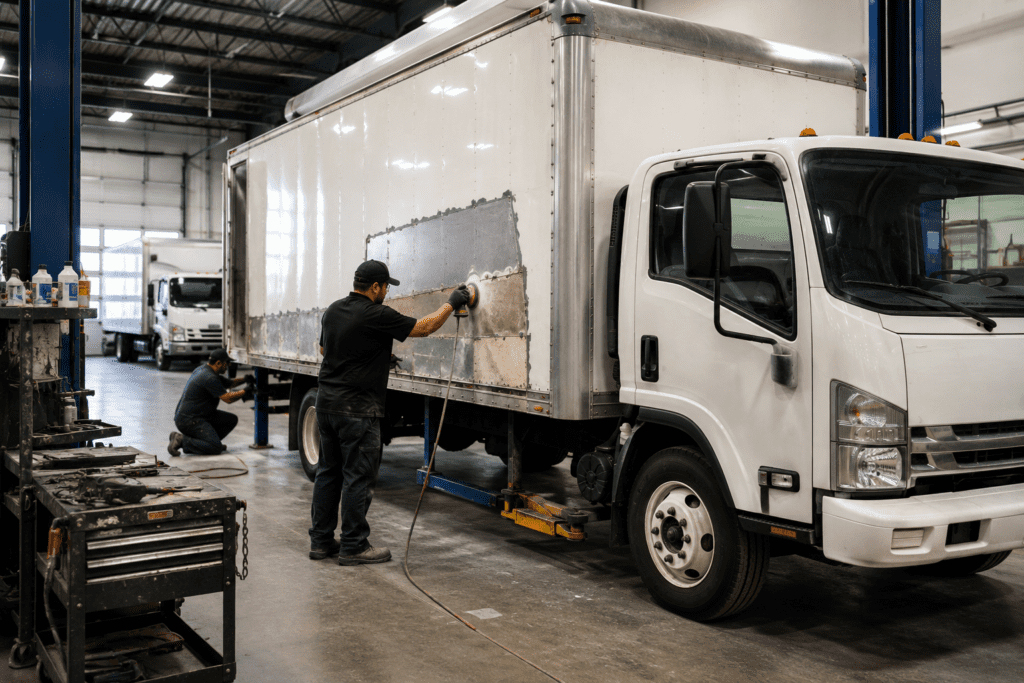
At 312 Truck Body Repair & Painting, we help Chicago-area businesses repair box truck body damage, rust, paint issues, collision damage, and fleet wear before small problems become bigger ones.
Why box truck body damage matters
Box trucks work hard. They are constantly moving through loading docks, city streets, warehouses, alleys, tight parking lots, job sites, and customer locations.
That creates plenty of opportunities for damage.
Common causes of box truck damage include:
Loading dock impacts
Rear-end collisions
Tight turns
Low clearance areas
Backing accidents
Road debris
Forklift or warehouse contact
Weather exposure
Rust from road salt
Daily wear from commercial use
Some damage is cosmetic. Some damage affects how the truck works. The problem is that the two often overlap.
A scrape can expose metal. Exposed metal can rust. Rust can spread. A damaged rear door can create cargo access issues. A small gap can let in water. A dented panel can make the truck look poorly maintained.
The sooner damage is evaluated, the easier it is to decide what needs repair now and what can be scheduled later.
Damage around rear doors and cargo access
Rear door damage is one of the most important issues to watch on a box truck.
Your rear doors need to open, close, seal, and lock correctly. If they do not, your team can lose time at every stop. Worse, cargo may be exposed to weather, theft risk, or movement during transport.
Rear door damage should be repaired quickly if you notice:
Doors sticking or not closing properly
Bent hinges
Damaged latches
Gaps around the door
Broken seals
Cracked or bent door panels
Water entering the cargo area
Locking issues
Loose hardware
If the truck is still being used every day, small rear door problems can become bigger from repeated opening, closing, loading, and unloading.
Side panel dents, scrapes, and punctures
Side panel damage is common on box trucks, especially in city driving and delivery work.
A scrape along the side of the box may look cosmetic, but it can become a larger issue if the paint or protective surface is compromised.
Side panel damage should be reviewed if there are:
Deep scratches
Exposed metal
Cracked paint
Torn or punctured panels
Rust forming around the damaged area
Large dents
Damage near seams or fasteners
Areas where water could enter
For branded trucks, side panel damage also affects appearance. If your truck has graphics, lettering, or company colors, visible damage can make the business look less professional.
Rust and corrosion
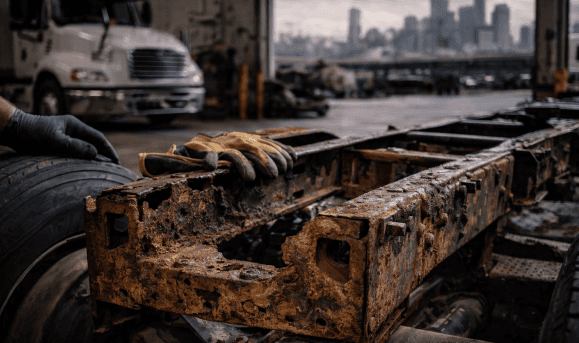
Rust is one of the biggest reasons small box truck damage should not be ignored.
In the Chicago area, winter road salt and moisture can speed up corrosion. Once rust starts, it can spread under paint and around seams, hardware, and lower panels.
Box truck rust commonly appears around:
Lower panels
Rear doors
Hinges and latches
Wheel areas
Box corners
Bumpers
Steps
Underbody areas
Exposed metal from scrapes or chips
Rust repair is usually easier when it is addressed early. Waiting too long can turn a smaller repair into a much larger body repair or refinishing job.
Damaged bumpers, steps, and liftgate areas
Box truck bumpers, steps, and liftgate areas take a lot of abuse.
Drivers and crew members use these areas constantly. They are also exposed to impacts from loading docks, forklifts, pallets, equipment, and road conditions.
These repairs should not be delayed when damage affects:
Safe footing
Rear access
Liftgate operation
Loading and unloading
Structural support
Visibility of lights or reflectors
Sharp or loose metal
Driver or employee safety
A damaged step or rear bumper may seem like a small problem until someone gets hurt or the truck becomes harder to use during daily operations.
Lighting and visibility damage
If body damage affects lighting, reflectors, or visibility markings, it should be repaired quickly.
Fleet vehicles need to be visible, especially in traffic, loading areas, early mornings, evenings, and poor weather.
Watch for damage near:
Tail lights
Marker lights
Brake lights
Reflectors
Side markers
Turn signals
Rear corners
Reflective tape or safety markings
Lighting-related damage can create safety concerns and may also create compliance issues depending on the vehicle and how it is used.
Water leaks and cargo protection
One of the most overlooked box truck problems is water intrusion.
A small crack, gap, puncture, damaged seam, or misaligned door can allow water into the cargo area. That can damage inventory, supplies, tools, furniture, packaging, or customer goods.
Water-related issues may show up as:
Wet floors
Water stains
Musty smells
Rust inside the box
Damaged cargo
Soft or weakened materials
Visible gaps around doors or panels
If a box truck protects cargo, the body needs to stay sealed and secure. Water intrusion should not be ignored.
Paint damage and exposed metal
Paint helps protect the truck body. When paint is scratched, chipped, peeling, or cracked, the surface underneath becomes more vulnerable.
Paint damage should be reviewed when it includes:
Exposed metal
Peeling paint
Cracking paint
Rust spots
Deep scrapes
Faded or failed paint
Damage across multiple panels
Sometimes a paint touch-up or targeted repair is enough. Other times, the truck may need larger refinishing work, especially if the paint failure is widespread or the truck needs to maintain a professional fleet appearance.
Cosmetic damage can still affect your business
Not every dent or scrape creates an immediate safety concern, but appearance still matters.
A box truck is often seen by customers, vendors, employees, and the general public. It may sit outside your business, park at customer locations, or travel through the neighborhoods you serve.
A damaged truck can make a business look careless, even when the service itself is excellent.
For businesses using branded trucks, appearance can affect:
Customer trust
Brand image
Driver pride
Professionalism
Local visibility
Fleet consistency
A clean, well-maintained truck tells customers your business takes care of the details.
Should you repair one box truck or schedule multiple fleet repairs?
For businesses with more than one truck, it can help to think beyond a single repair.
If multiple trucks have dents, rust, paint issues, or visible wear, a fleet repair plan may make more sense than handling everything reactively.
A repair plan can help prioritize:
Safety-related damage
Cargo protection issues
Rust prevention
Customer-facing appearance
Paint and branding consistency
Trucks nearing resale or reassignment
Repairs that can be grouped together
This can help reduce surprise downtime and keep the fleet looking more consistent.
How Chicago conditions make box truck damage worse
Chicago-area trucks deal with tough conditions.
Between road salt, potholes, traffic, tight loading docks, construction zones, and winter weather, box trucks take a beating. Even small damage can worsen faster in this environment.
That is why box truck repair in Chicago should be handled with long-term durability in mind, not just a quick cosmetic fix.
A truck that works in this market needs body repair, paint, and rust prevention that can hold up to real commercial use.
Questions to ask before delaying a box truck repair
Before deciding to put off a repair, fleet managers and business owners should ask:
Is metal exposed?
If yes, rust risk increases.
Does the damage affect doors, hinges, latches, or cargo access?
If yes, the damage can interfere with daily operations.
Could water get into the cargo area?
If yes, the repair should be addressed quickly.
Is there rust already forming?
If yes, waiting will usually make the problem worse.
Does the damage affect safety, lighting, steps, or rear access?
If yes, it should be prioritized.
Does the truck still represent the business well?
If the truck is customer-facing, appearance matters.
The goal is to prevent bigger downtime later
Delaying box truck damage repair can feel like a short-term win because the truck stays on the road today.
But if that damage turns into rust, door problems, leaks, safety concerns, or larger body repairs, the downtime later may be worse.
The smarter approach is to inspect damage early, understand the repair options, and schedule work before the problem grows.
That helps protect the truck, the cargo, the driver, and the business.
Less Downtime. More Road Time.
At 312 Truck Body Repair & Painting, we repair box trucks, semi trucks, commercial trucks, and fleet vehicles throughout the Chicago area.
Whether your truck has dents, scrapes, rust, rear door damage, collision damage, paint failure, or worn body panels, our goal is simple:
"Our garbage trucks endure a lot of wear and tear—from accident damage to rust buildup. 312 Truck handles everything from structural repairs to repainting and de-branding before resale. Their expertise in durable, wear-resistant coatings keeps our fleet looking sharp against the elements."
RedSet Waste
"Our business turns old shipping containers into mobile bars and quick-serve restaurants—we needed a paint partner who understands precision. 312 Truck’s marine-grade coatings match our brand colors with a flawless finish every time. Their attention to detail exceeds our clients' high expectations."
KAMRAN Container Bars
"Every off-season, we turn to 312 to refresh our fleet. They sandblast and repaint dozens of frames, trailers, and specialty paving equipment so everything is ready to hit the road again. Their speed and consistency have never let us down, and the quality of work speaks for itself."
Redux Asphalt
"Although we handle minor collision work in-house, when it comes to paint, 312 Truck is our go-to. Their pricing is among the most competitive in the Chicagoland area—often half of what others charge while still delivering high-quality results. They’ve been a valuable extension of our team."
JMX Logistics
"For over 20 years, the Patel family [312's owners] has worked alongside Enterprise Rentals, managing thousands of repairs of all sizes. Their deep knowledge of the collision industry—especially fleet-specific repairs—makes them a trusted resource in keeping our vehicles road-ready."
Enterprise
"Keeping our fleet in top shape is a priority, and we need a partner that operates with speed and efficiency. 312 Truck has been instrumental in helping maintain our delivery vehicles—everything from mechanical work to heavy collision and cosmetic repairs for hundreds of our units every year."
Amazon
"312 Truck has been a reliable partner for our vehicle maintenance centers in the Midwest. Their team has helped with everything from Promaster vans to full-size trailers. One of the key reasons we continue to trust them is their excellent communication—keeping us informed throughout."